While the Dallas-Fort Worth area continues to be recognized for its strong economy, new numbers released Tuesday highlight a growing divide between economic growth and the number of families struggling to put food on the table.
More than 6 million Texans are facing hunger, an 11% increase from previous years, according to new data cited by North Texas food banks. The largest increase has been among children, with one in four Texas children not knowing where their next meal is coming from.
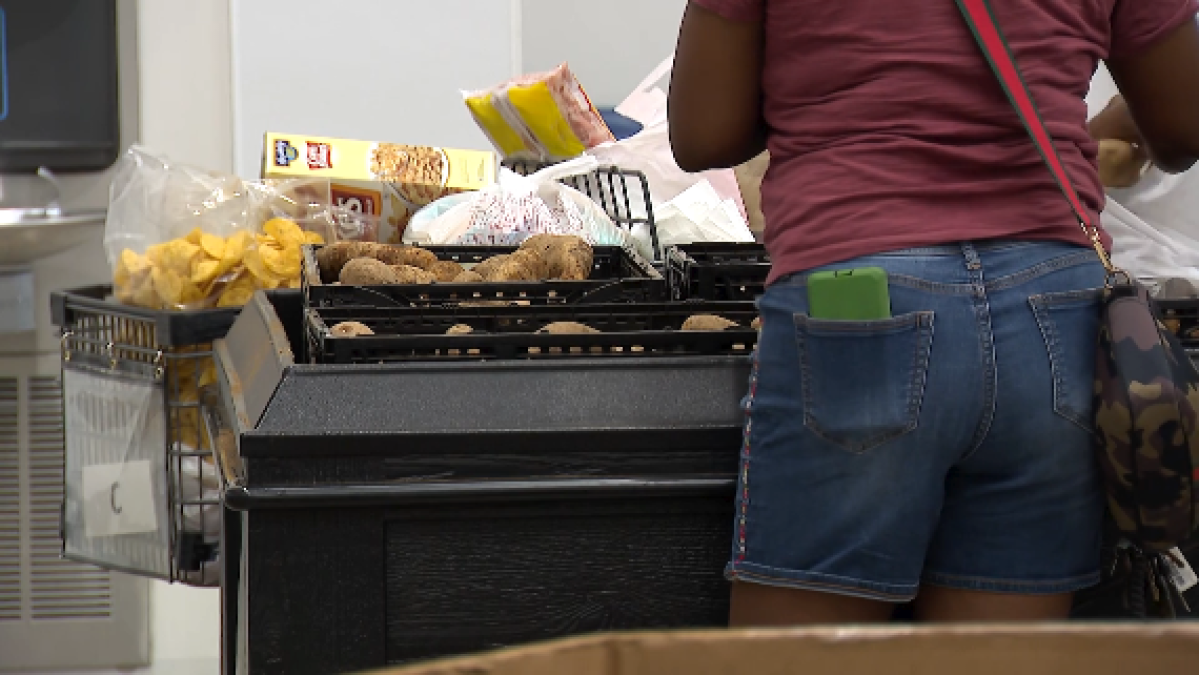
At Metrocrest Services in Carrollton, Adwoa Kwofie searched through fresh produce while working to stretch her family’s grocery budget. Recently unemployed, Kwofie said she never expected to rely on a food pantry but now depends on it to help feed her twins healthy meals.
“I didn’t think I would ever use food pantries, but now with groceries so high, it helps to kind of map it in your budget,” Kwofie said.
Food bank leaders said stories like Kwofie’s are becoming increasingly common.
“And sadly, what we see the largest increase in hunger statewide, here in the Dallas-Fort Worth area, is among children,” Trisha Cunningham, president and CEO of North Texas Food Bank, said.
According to the most recent findings from Feeding America’s Map the Meal Gap study, Texas continues to lead the nation in hunger and the Dallas-Fort Worth region has the fourth-highest number of people facing hunger, behind L.A. New York and Houston.
Cunningham said food insecurity is growing much faster than the state’s population, underscoring the need for continued community support.
“Food insecurity growth is outpacing – by far – population growth,” Cunningham said.
Leaders with the North Texas Food Bank and Metrocrest Services said they want families to seek help before they reach a crisis.
“What we also don’t want is for people to wait until they are in a crisis. We want to make sure they are coming to us before the crisis happens,” Gabe Madison, CEO of Metrocrest, said.
Advocates also expressed concern that federal changes to the Supplemental Nutrition Assistance Program, or SNAP, benefits could push even more Texans into uncertainty.
As Kwofie continues searching for a new job, she said having a place to turn for food assistance has eased some of the pressure.
“It helps, it helps to reduce the stress overall,” Kwofie said.
The North Texas Food Bank and Tarrant Area Food Bank are asking Congress to delay implementation of the SNAP cost-share program. They said the change would place a greater burden on the state and local food banks.
This story was originally reported for broadcast by NBC DFW. AI tools helped convert the story into a digital article, and an NBC DFW journalist edited it again before publication.