The U.S. fertility rate dropped to a historic low in 2025, according to data from the Centers for Disease Control and Prevention.
The agency found about 53 births for every 1,000 women of reproductive age, a 1% decline from 2024.
The fertility rate has dropped 23% since 2007. Experts point to a decline in teenage pregnancies, down 80% since 1991, but also to women waiting longer to give birth.
The average age of first birth is now 27.5, up from 25 in 2005, and 24 in the 1990s, according to the CDC.
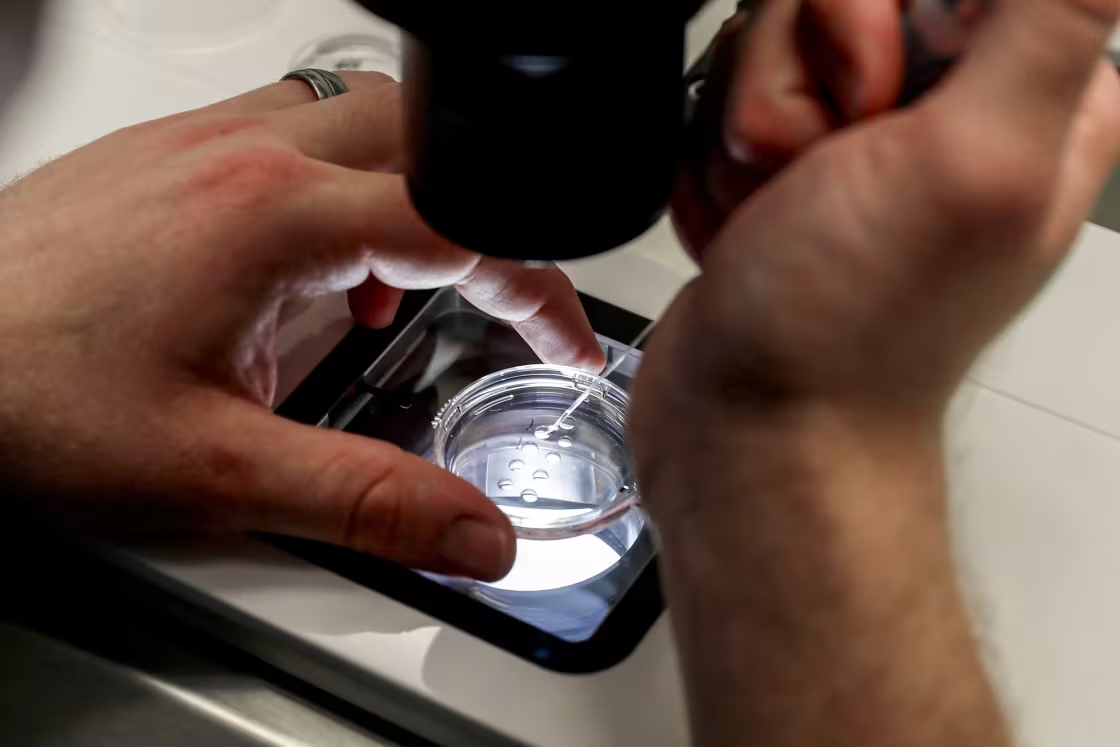
Marissa Cervantes, who is 45, gave birth to her son, Noah, 11 months ago through in vitro fertilization. IVF is a type of fertility treatment where eggs are combined with sperm outside of the body in a lab.
“My husband, Will, and I, we got married later in life,” said Cervantes.
“I was really trying to just take life, you know, one day at a time.”
Cervantes lost her father and two brothers unexpectedly and dealt with tremendous grief. She chose to focus on healing before starting a journey to motherhood.
“And that grief really changed the way that I moved through my life for a very long time,” she said.
She had a total of seven egg retrievals, which took years. Doctors were able to make one euploid embryo, meaning it was genetically normal.
“We transferred it, and then that’s that one embryo that I had, the only one, single embryo I had available was the one that took. That resulted in the birth of my son,” said Cervantes.
Delayed fertility is one of several factors contributing to a decline in the birth rate.
Economic conditions and changing norms also play a role, as women pursue education and careers first.
Isis Martin turned 30 this summer and is choosing to begin her fertility journey without a partner.
“I also said by age 30, and I just turned 30 maybe three weeks ago, that I wanted to have a child. And because I’ll be finished with school in December, I felt like it was the best moment,” she said.
The doctoral student was diagnosed with uterine polyps, and then doctors also discovered her fallopian tubes were blocked. These anatomic factors affect fertility, making Martin a candidate for IVF.
“I’m nervous because you think about the judgment. You think about having a partner. And so because I’m doing it alone, I think that’s where my village really comes into play,” said Martin.
Around the world, one in six people are affected by infertility, according to the World Health Organization.
It’s a sensitive topic, but one Dr. Michelle Catenacci, the medical director at Advanced Fertility Center of Chicago, says more people are talking about, as advanced reproductive technologies make the process more accessible.
“We have noticed a trend of women delaying childbearing and coming into the clinic later to start a family,” said Catenacci.
“We’re born with all the eggs that we’ll ever have. And so, as we get older, there’s both a decline in the quantity and the quality of eggs, and this can make the chance of pregnancy lower and can increase the risk of miscarriage.”
However, today, women have more options to preserve fertility than ever before, including major advancements in egg freezing over the last decade.
“We’re seeing a lot more patients that are coming in in their 20s and their 30s who aren’t ready right now to have a family but want to protect that option potentially for the future,” said Catenacci.
IVF is an option for single parents, families with a history of miscarriages, women who are older, or couples experiencing unexplained infertility.
The IVF process is complex and can be emotionally and financially draining. Cervantes found comfort in the community of women she found with similar experiences.
“I wish people understood that starting a family later in life is not always simply a matter of waiting too long or putting it off,” she said.
“Life happens. People meet their partners later. People experience loss,” said Cervantes. “People build careers, care for family members, you know, spend years trying to get to a place where they feel stable enough to become parents.”
“Relying on the community that’s out there is what I want women my age, who are trying to conceive later in life, to recognize,” said Cervantes.