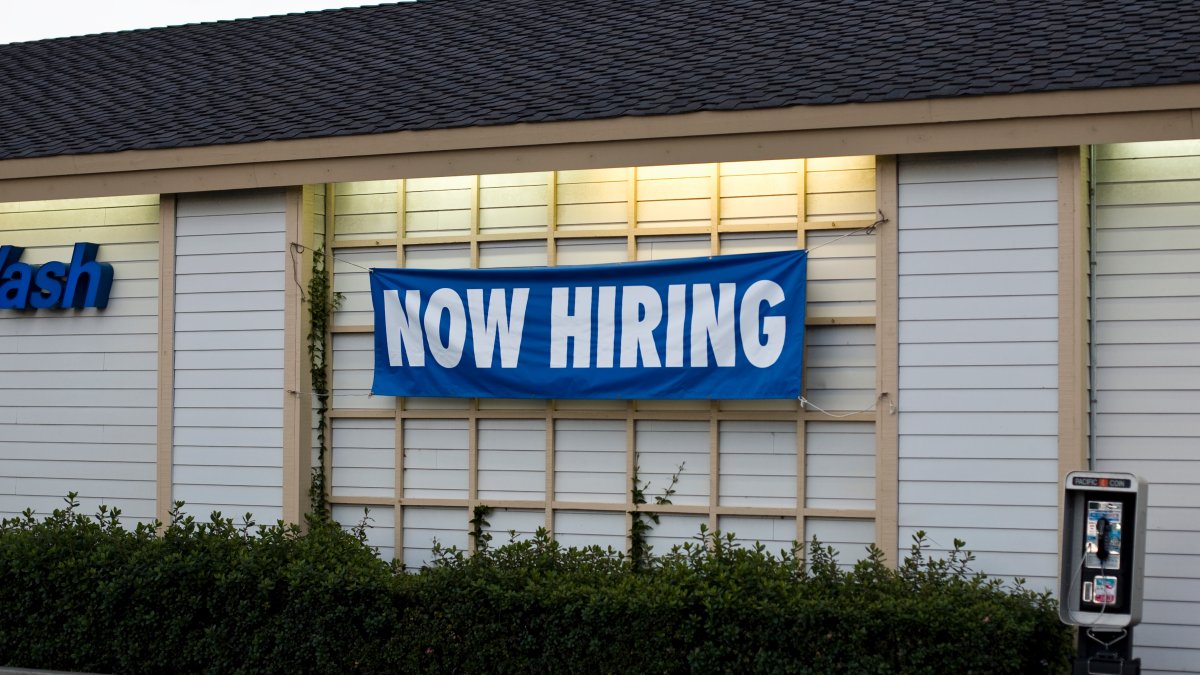
The U.S. economy in August added 162,000 jobs, far more than expected. The unemployment rate remained unchanged at 4.1%.
Economists surveyed by Dow Jones had expected overall hiring of just 53,000 roles and a steady unemployment rate.
Meanwhile, employment for June was revised up by 11,000 roles to a total addition of 31,000. July, which had previously been recorded as a negative 23,000, was revised up sharply by 44,000 to a total net job additions of 21,000.
Taken together, the strong August number and the upwardly-revised June and July numbers will give economists significant added confidence on the stability of the labor market.
“August’s blowout jobs report provided evidence of a stable labor market heading into the fall, supporting resilient consumer spending but also raising market expectations for a near-term Fed rate hike amid unacceptably high inflation,” Wells Fargo’s Jennifer Timmerman said.
Wage growth, which has been another problem for workers, was 3.1% year-over-year in August. That was unchanged from July.
Timmerman called that “the fly in the ointment,” adding that “with oil prices poised to nudge inflation higher, real wages remain vulnerable during the balance of the year.”
The payrolls number also slightly increased market odds for a September rate hike by the Federal Reserve, however most market watchers still believe that next week’s inflation report will prove to be pivtol.
On the other hand, President Donald Trump took to social media, writing that the report was “great,” and as a result he called for the Fed to “lower the interest rates” immediately. Trump added that the Fed and his newly-installed chairman Kevin Warsh “must get smart” and “be patriots.”
The Fed is widely expected to raise rates before the end of the year due to rising energy prices as a result of the wars in Iran and Ukraine and continued trade tensions.
Among the sectors that saw job growth during the month, employment at restaurants and bars rose by 59,000, while the local government education sector gained 42,000 as teachers returned to school.
The construction sector also gained 22,000 roles.
However, information technology employment declined by 23,000 in August. In that sector specifically, BLS said that job losses occurred at companies that provide computing infrastructure, data processing, and web hosting.
The ongoing lag between wages and inflation also comes at a difficult time for U.S. consumers, especially those in lower income tiers.
The inflation rate in July was 3.4% from a year ago, but that was before energy prices started climbing again.
On Friday, the international crude oil benchmark Brent traded around $95 per barrel. Since Aug. 4, the price of Brent has risen nearly 20%.
August inflation data won’t be released until Sept. 11. But any uptick from July would widen the gap between wage growth and rising prices.
While Friday’s data on its face does appear positive, economists cautioned before it was released that, due to seasonal factors, the month of August often faces revisions in the months ahead.
Revisions are a normal part of the process when BLS compiles the report each month. Revisions typically stem primarily from the agency receiving information from businesses about their hiring and payrolls too late to include in the month’s first reading.
Additionally, August’s number alone looks positive, but average job growth so far this year is tracking at 80,000 per month. That is above 2025’s 10,000 average, but well below 2023 and 2024’s averages.
This story uses functionality that may not work in our app. Click here to open the story in your web browser.