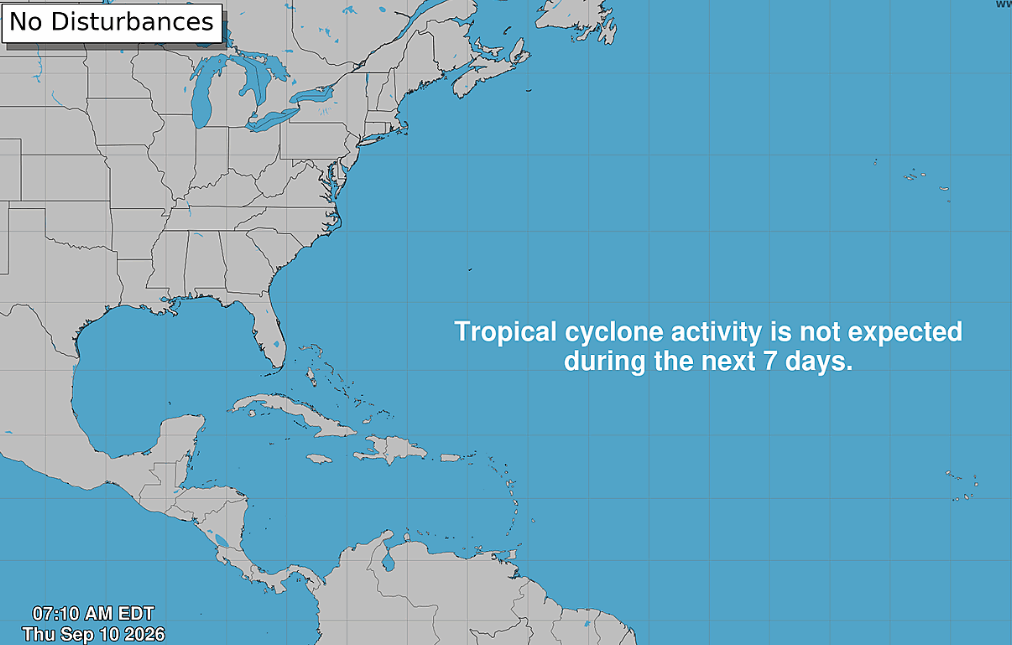
Thursday marks the climatological peak of the 2026 Atlantic hurricane season, one which is proving, thus far, to be historically quiet.
Only five named storms have formed in the Atlantic basin this year, and not one has become a hurricane. That will become historic this weekend and set a new satellite-era record for the latest formation of the first hurricane. The previous record is Sept. 11, a date reached in both 2002 and 2013.
While short-lived systems have been the theme of this muted season, the lack of storms is best reflected in the season’s Accumulated Cyclone Energy, or “ACE.”
This metric considers total storm duration and intensity. So far, the Atlantic has generated an ACE value of just 4.4, which is only about 7% of the typical amount for this point in the season. For perspective, the average season produces about 58.2 ACE by mid-September.
So far, the atmosphere has repeatedly stood up against tropical development. Doses of Saharan air and persistently strong wind shear have made it difficult for disturbances to organize and strengthen. Even when storms have managed to form, they have generally been short-lived, lasting only a day or two before environmental conditions caused them to weaken.
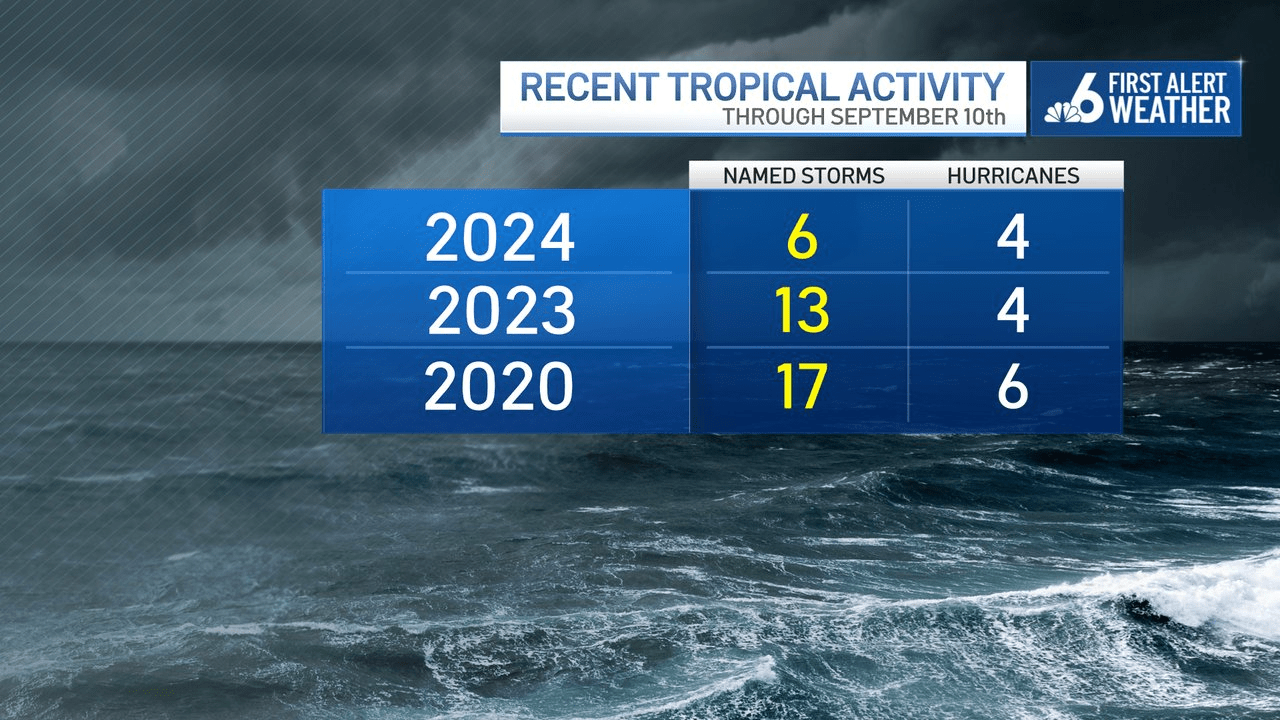
The contrast with recent seasons is remarkable. For example, at this point in 2024, six named storms and four hurricanes, including Beryl, which became a Category 5, had formed. Francine was forming in the Gulf on Sept. 9. The 2024 season would ultimately produce 18 named storms, 11 hurricanes and five major hurricanes.
Going back to 2020, 17 storms and six hurricanes had already formed by Sept. 10.
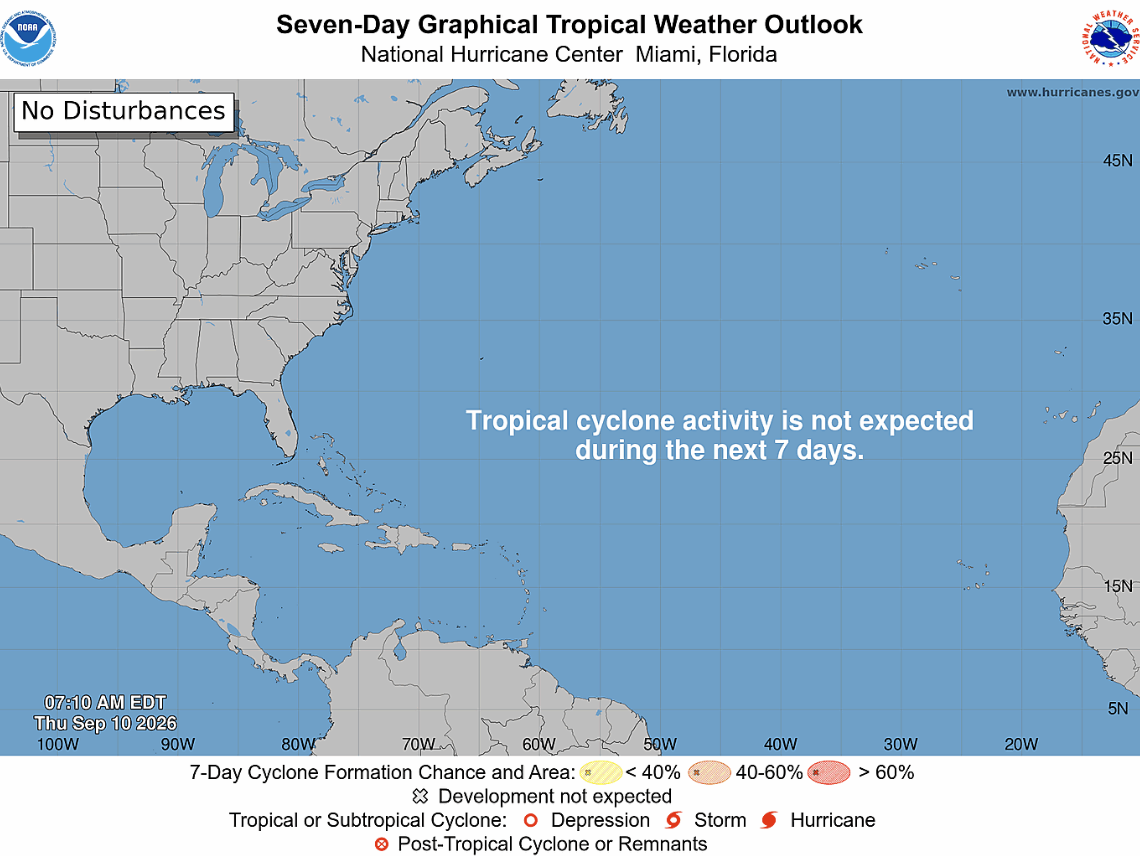
The current quiet pattern is particularly noteworthy because it was never clear the season would be this dormant. Colorado State University is still forecasting nine named storms, four hurricanes and one major hurricane for the season. NOAA’s late-summer update called for 7 to 13 named storms, 2 to 6 hurricanes and 0 to 2 major hurricanes, with most of the expected activity concentrated in August (which produced three systems), September and October. NOAA classified a below-normal season as the most likely outcome, but just how far below expectation has yet to be seen.
Naturally, a quiet start does not guarantee a quiet finish. September is typically the most active month of the Atlantic hurricane season, and conditions can change. There remains time for the season to produce more storms from mid-September to late October, but it’s likely that the year will finish below average. It’s that time frame that South Florida is, historically, the most vulnerable for impacts.
For now, however, 2026 is lining up to be one of the most noteworthy Atlantic hurricane seasons due to the low number of storms, below average ACE and making it this far in the year without hurricane development. This is the byproduct of a “very strong” El Niño season that was well forecast.
The Atlantic hurricane season ends Nov. 30.